

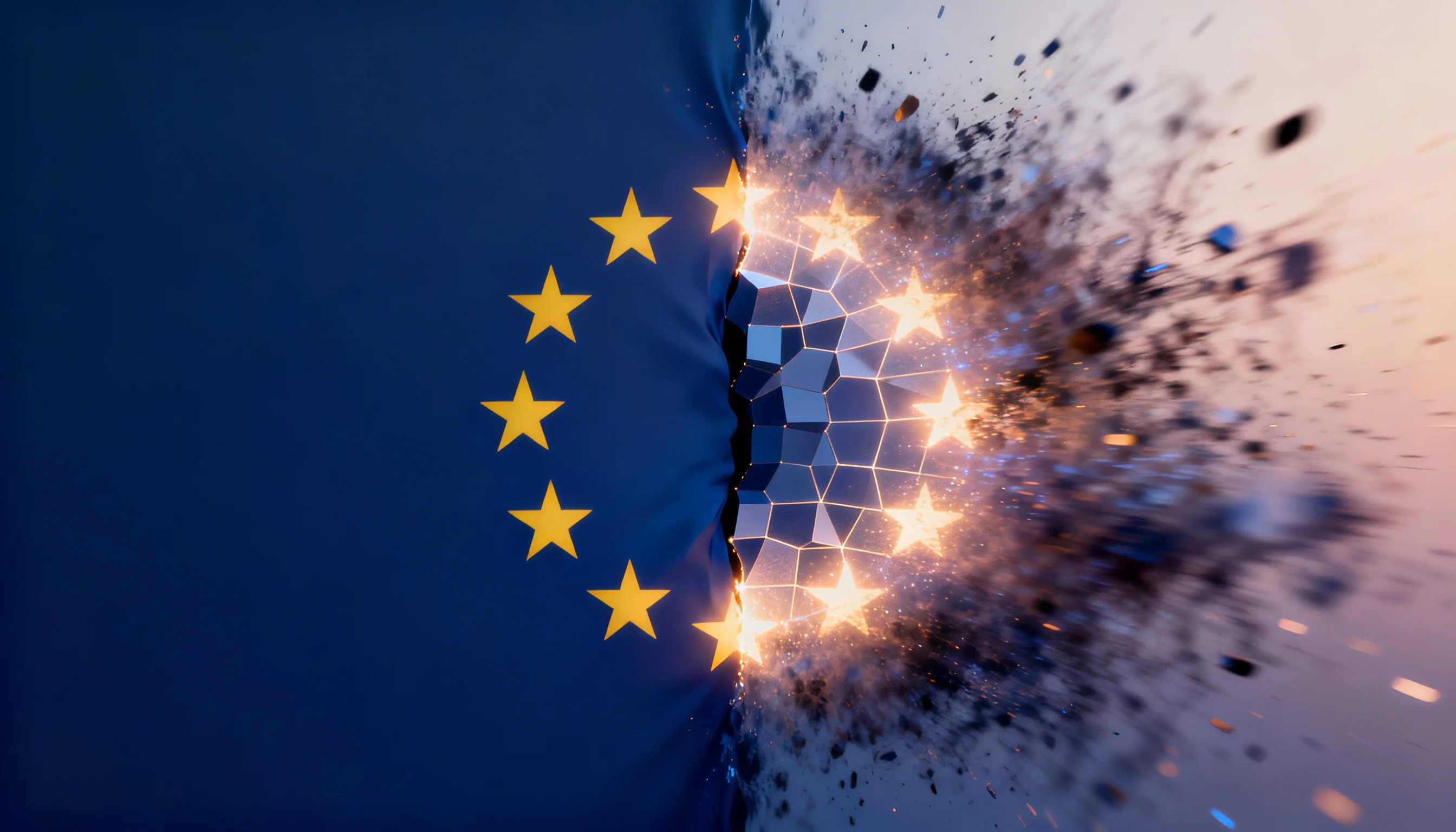
La digital sovereignty has become one of the most discussed topics in Europe in recent months. The growing geopolitical complexity, the impact of European regulations and the dependence on non-EU technologies are requiring companies, MSPs, system integrators and software houses to deep reflection: Who really controls the data? And what does' security 'mean in an increasingly cloud-centric world?
In this article, we analyze in a clear and updated way what digital sovereignty is, what regulations guide it and why the cloud is today the most critical point, but also the greatest opportunity, to truly protect business data.
Why is there so much talk today about digital sovereignty?
There is not a single motivation, but several.
- Geopolitical tensions and technological dependence. In recent years, global balances have shifted rapidly. The United States, China and Europe are defining different approaches to data management, security, and control of digital platforms. This dynamic creates technological addictions that can impact European companies and institutions, especially when critical infrastructures, such as the cloud, are managed by non-EU actors.
- The strategic role of data for businesses and public administrations. Data is no longer a simple information asset, but a strategic element for competitiveness, innovation and business continuity. For this reason, the need for:
- check its geographical position;
- ensure their protection;
- ensure that they cannot be accessed by foreign regulations.
- The European Union's push for an independent digital model. In recent years, the EU has embarked on a clear path towards digital autonomy through:
- regulation of data transfers;
- strengthening cybersecurity;
- promotion of European cloud infrastructures.
The result is a context that favors sovereign cloud solutions that comply with European regulations.
What is digital sovereignty and what are its fundamental pillars?
Digital sovereignty is the ability of an organization or a State to fully control its data, technologies and digital processes, without depending on suppliers subject to external regulations.
To really understand it, let's analyze its three fundamental pillars.
- Data Sovereignty: It's about the control over the physical location of the data and the jurisdictions that can access it.
For an Italian company, this means being certain that:- the data remain in Italy or in the EU;
- the data are not accessible by non-EU entities or governments;
- the replication, backup and DR processes are fully transparent.
- Operational Sovereignty: refers to the operational control of infrastructures and it is a crucial point for MSPs and System Integrators who must guarantee security, auditing and accountability to their customers. Essentially, it answers the following questions:
- who can physically intervene?
- Who manages privileged access?
- Which figures have visibility or permissions?
- Software & Cloud Sovereignty: indicates the possibility of using technologies and platforms that are independent of non-EU regulatory constraints, not subject to Cloud Act or equivalent laws and finally, interoperable and without lock-in.
These pillars are central to Italian companies as they represent a legal, technological and operational supervision to guarantee continuity, security and compliance in an increasingly complex ICT ecosystem.
Regulations are changing the landscape: GDPR, Data Act, NIS2
Digital sovereignty is not an abstract concept: it is guided by several integrated regulations, which every IT manager and service provider should know.
- GDPR for data residency and non-EU transfers: the GDPR, in fact, imposes strict limits on data transfers to inadequate countries. The Schrems I and Schrems II judgments have further clarified that data processed by providers subject to laws such as the US Cloud Act can be considered unprotected, even when physically hosted in Europe.
- Data Act for Interoperability and Portability: the Data Act introduces new rules to ensure data portability, avoid technological lock-ins, ensure transparency of cloud processes. And it's very relevant for software houses and SaaS providers.
- NIS2 for security, resilience and supply-chain: we have already talked about it in another item, however, the NIS2 Directive imposes, among other things, stricter cyber-security controls, supply chain obligations and direct responsibilities for MSPs and SIs.
What's new for MSP, System Integrator and Software House?
All these European standards, although not all mandatory, place the emphasis on:
- know where the data is located;
- document suppliers and subcontractors;
- ensure operational continuity and native security;
- avoid involuntary exposure to non-EU providers.
The cloud becomes the critical element of sovereignty: opportunities and risks
Considering these requests, the cloud is today the component most exposed and subject to attention because It hosts sensitive data, is often managed by global providers, It provides for automatic replications and represents the backbone of modern digital services.
Just consider that US hyperscalers are subject to the Cloud Act, which allows US authorities to request access to corporate data even if physically stored in Europe. This already creates a regulatory conflict with GDPR and Data Act. Or again, the discourse of replicating data outside the EU. Many global providers use global CDN, cross-region backup, non-European subcontractors, R&D management, or support based outside the EU. All of this can lead to unwitting data transfers.
Is it therefore possible to define a true sovereign cloud in Italy and Europe?
To date, the clear answer is no, because, as we said before, there is no complete regulation that defines it. However, It is possible to define some common characteristics that a sovereign cloud certainly respects Like:
- Guarantee of data placement in Italy/EU, total absence of non-EU transfers and complete traceability of transactions;
- Integrated compliance with GDPR, Data Act, NIS2, advanced security and auditing standards such as ISO 27001, 27017, 270178;
- Adoption of independent technologies and no lock-in so they are open, interoperable and not subject to foreign regulations;
- Local assistance and contractual transparency, support must be provided by European personnel, with clear contracts and without transfer clauses.
Challenge or opportunity? What changes for Italian companies
For Italian companies, especially Software House, System Integrator, MSP and IT managers, it means:
- reduce legal and operational risks because choosing a sovereign cloud simplifies compliance management and dramatically lowers the risks of regulatory data breaches;
- real control over digital assets because the location of data in Italy/EU allows for more rigorous auditing, easier governance and greater predictability;
- offer safer services for customers, regulatory compliant infrastructures, less complexity in GDPR/NIS2 documentation, a competitive advantage in the local market.
Digital sovereignty is not a trend: it's a strategic need for all organizations that want protect your information assets and operate in an increasingly strict European regulatory environment. The cloud is the most critical point, but it is also the one where it is possible to make a difference by choosing sovereign providers.