
Environments that are hard to compromise, fast to restore
Protect your data and systems, respond quickly to incidents, and keep everything in Italy
3 IT risks to consider
Supply chain attacks
Targeted ransomware
Data breach

How CloudFire changes your IT security
A single point of contact
Security, backups, and infrastructure from a single partner—no more juggling multiple vendors.
As-a-service model
You manage everything from the platform, choosing the level of control you need for each individual client.
Resilient and recoverable
Environments that are hard to compromise and quick to restore, with integrated backup and disaster recovery.
Data and security in Italy
Infrastructure within CloudFire's Italian regions, an ISO/IEC 27001 certified provider.
Which environments should be protected?
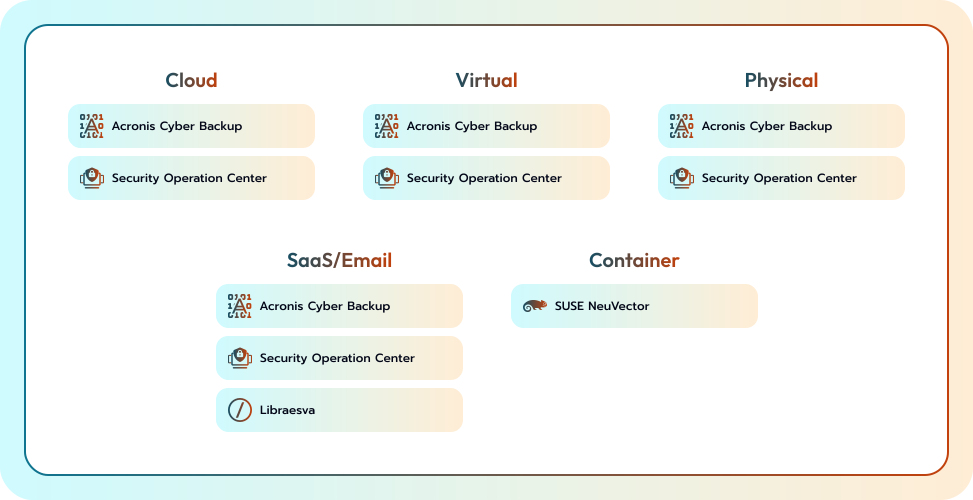
Key features
Data and system protection
Through next-generation firewalls, advanced antivirus and antimalware, access management and control, advanced encryption, and email security.
Rapid incident response
Thanks to threat blocking and incident forensics, you can identify the cause, origin, and impact, and then proceed with system restoration and automated response.
Centralized management
Benefit from a management console featuring comprehensive security and status monitoring, detailed reporting, and automated security patching.
Real-time threat detection
Through continuous network monitoring tools to identify evasive and zero-day threats, combined with the collection and analysis of cyber threat intelligence for complete visibility.
Resources


FAQ
What are the most urgent cyber threats?
Beyond malware, phishing, and intrusions, three risks weigh most today: supply chain attacks, targeted ransomware that brings services to a halt, and customer data breaches.
How do cyber security solutions help me protect my data and my customers' data?
They strengthen your infrastructure, protect sensitive data, ensure service continuity, and help you demonstrate compliance with security standards.
Which solutions are best suited to a Service Provider?
Beyond endpoint, network, and cloud security, consider event monitoring and correlation, backup and disaster recovery, and incident response automation. With CloudFire you activate only what you need, as a service or managed.
How do I choose the right solution for my business?
Start from what you need to protect, your customers' risk level, and how much you want to manage on your own. A CloudFire expert helps you put together the right services.